Children develop movement and physical skills at different stages, and some may need additional support because of neurological or neuromuscular conditions. NISE-Stim Therapy for Children is an emerging rehabilitation approach that uses gentle electrical stimulation through electrodes placed on the skin over the spine.
It aims to influence the nervous system’s role in movement, posture, and muscle control. When combined with active physiotherapy, it may offer additional support for selected children with physical and neurological challenges.
NISE-Stim stands for Non-Invasive Spinal Electrical Stimulation. It is a specialised approach that uses controlled electrical impulses delivered through adhesive electrodes placed on the skin.
The technique aims to stimulate spinal nerve networks involved in movement, posture, and muscle coordination.
Unlike some traditional electrical stimulation methods that directly target individual muscles, NISE-Stim focuses on influencing the spinal networks that help coordinate movement.
It may be considered as part of a wider rehabilitation programme for children with certain neurological or neuromuscular conditions. However, it is an emerging approach, and research into its effectiveness in children is still developing.
Parents may wonder how electrical stimulation can support a child’s movement and physical development.
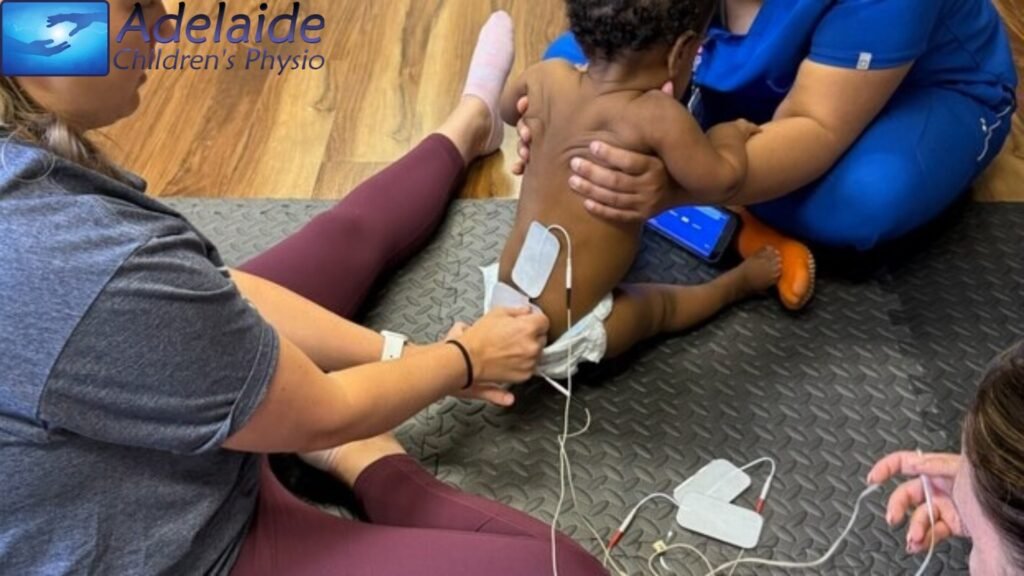
NISE-Stim uses small electrodes attached to the child’s skin. These electrodes deliver carefully controlled electrical impulses to selected areas around the spine.
Here is how a typical treatment approach works:
1. Placement of Electrodes
A trained practitioner positions adhesive electrodes over selected areas of the spine according to the child’s individual needs.
2. Controlled Electrical Stimulation
A specialised device delivers gentle electrical impulses through the electrodes to influence spinal nerve networks.
3. Supporting Muscle Activation
The stimulation aims to improve the responsiveness of nerve pathways involved in muscle activity and movement.
4. Combining Stimulation with Physiotherapy
The technique may be combined with exercises, play-based activities, balance training, and functional movement practice.
The purpose is to connect stimulation with meaningful activities that support everyday physical skills.
Every child has different physical abilities and rehabilitation needs. Depending on their condition and treatment goals, NISE-Stim may offer additional support in certain areas.
Some potential areas of benefit include:
Some neurological conditions can affect how effectively the nervous system communicates with muscles. Spinal stimulation aims to influence these pathways and support muscle activation.
Maintaining a stable sitting or standing position can be challenging for some children. When combined with targeted exercises, stimulation may support rehabilitation goals involving posture and trunk control.
Balance and coordination are important for everyday activities such as sitting, standing, reaching, and walking. NISE-Stim may be incorporated into programmes that practise these functional skills.
The overall goal of paediatric rehabilitation is to help children participate more comfortably in daily activities. Stimulation may be used alongside movement training to support functional rehabilitation.
A personalised treatment programme can focus on the child’s specific challenges, abilities, and developmental needs.
Important: These are potential treatment goals, not guaranteed outcomes. The evidence for NISE-Stim specifically remains limited, and individual results can vary.
NISE-Stim may be explored as a complementary rehabilitation approach for selected children with neurological or neuromuscular conditions.
These may include:
Cerebral Palsy: Children with cerebral palsy may experience muscle stiffness, weakness, balance difficulties, and challenges with movement.
Spina Bifida: This condition can affect the development of the spinal cord and nerves, sometimes leading to mobility and muscle-function difficulties.
Spinal Cord Injuries: Depending on the injury and remaining nerve function, spinal stimulation may be explored as part of specialist rehabilitation.
Neuromuscular Conditions: Some children experience difficulties with muscle activation, strength, and functional movement due to neuromuscular disorders.
Suitability depends on the child’s diagnosis, medical history, physical abilities, and individual assessment. NISE-Stim is not appropriate for every child.
Before considering this treatment, parents should understand how it works, its potential benefits, and its limitations.
Here are some important things to discuss with a healthcare professional:
Parents should also ask about the practitioner’s training and experience with paediatric spinal stimulation.
At Adelaide Children’s Physio, we understand that every child has different developmental and physical needs.
Our approach focuses on personalised paediatric physiotherapy for children from birth to 18 years, including those with neurological, musculoskeletal, genetic, and neuromuscular conditions.
Our physiotherapy services include:
We use child-friendly and play-based approaches to encourage participation and make therapy engaging.
If you are exploring NISE-Stim for your child, our team can help you understand the role of an individual physiotherapy assessment and appropriate rehabilitation options. Please get in touch with the clinic to confirm whether this specialist stimulation service is currently available.
Choosing the right physiotherapy support is an important decision for every family.
At Adelaide Children’s Physio, we focus on:
Personalised Care: Treatment plans are designed around each child’s abilities and developmental goals.
Experienced Paediatric Support: Our clinic is led by a qualified therapist with more than 20 years of experience working with children.
Play-Based Activities: Engaging exercises help children practise important physical skills.
Family Involvement: Parents receive guidance to support their child’s progress beyond therapy sessions.
Flexible Care: Clinic appointments and home physiotherapy visits are available.
Every child’s development and rehabilitation journey is different. Understanding available treatment approaches can help parents make informed decisions about their child’s physical health.
At Adelaide Children’s Physio, we are committed to providing personalised paediatric physiotherapy that supports children’s movement, strength, coordination, and independence.
Whether your child needs support with cerebral palsy, developmental delays, neurological conditions, or neuromuscular challenges, our team is here to help you explore appropriate care options.
Contact Adelaide Children’s Physio today to discuss your child’s physiotherapy and rehabilitation needs.
1. What does NISE-Stim stand for?
NISE-Stim stands for Non-Invasive Spinal Electrical Stimulation. It uses electrical impulses delivered through skin electrodes to influence spinal nerve networks involved in movement and muscle control.
2. Is NISE-Stim painful for children?
The treatment is designed to be non-invasive. Children may experience different sensations during stimulation, so the intensity and comfort should be monitored by a trained practitioner.
3. Can NISE-Stim help children with cerebral palsy?
It may be explored as a complementary rehabilitation approach for selected children. However, evidence specifically supporting NISE-Stim in cerebral palsy is still developing, and results are not guaranteed.
4. Can NISE-Stim help children with spina bifida?
Transcutaneous spinal stimulation has been used in specialist programmes for children with spina bifida. Its suitability and potential benefits depend on the child’s individual condition and rehabilitation goals.
5. Is NISE-Stim a replacement for physiotherapy?
No. It is intended to complement active rehabilitation rather than replace physiotherapy, exercises, and functional movement training.
6. How many NISE-Stim sessions does a child need?
There is no single treatment schedule suitable for every child. The number and frequency of sessions depend on the child’s condition, clinical assessment, and response to treatment.
7. Does Adelaide Children’s Physio provide NISE-Stim?
Please get in touch with Adelaide Children’s Physio directly to confirm current NISE-Stim availability and discuss suitable rehabilitation options for your child.