
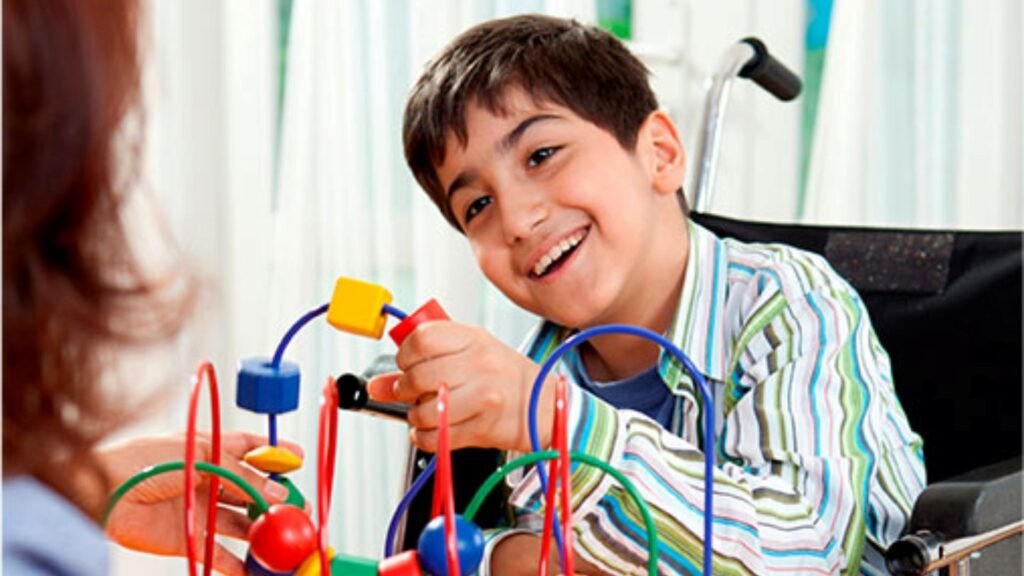
For children living with neurological conditions, injuries, or developmental challenges, the right support can make everyday movement and participation easier. Paediatric Neurorehabilitation in London focuses on helping children develop functional skills, improve movement, and build confidence in ways that are appropriate for their age and individual needs.
Every child progresses differently. Some may need support with balance or walking, while others may benefit from help with coordination, posture, strength, or everyday activities. A personalised rehabilitation programme can focus on practical goals that matter to the child and family.
Paediatric neurorehabilitation is a specialised approach that supports children whose movement and physical abilities are affected by neurological or neuromuscular conditions. Treatment is designed around the child’s developmental stage, abilities, challenges, and goals.
Rather than using the same programme for every child, physiotherapists assess how a child moves, plays, communicates through movement, and manages everyday tasks. The findings help create an individual treatment plan that can be adapted as the child develops.
The overall aim is not simply to practise exercises. It is to help children use their abilities in meaningful situations, such as walking, getting up from the floor, playing with friends, participating at school, or becoming more independent at home.
Neurorehabilitation may be considered for children experiencing a range of neurological or developmental difficulties. These can include:
The type and intensity of therapy will depend on the child’s condition and current abilities. An assessment helps identify which areas require attention and what goals are realistic and meaningful.
Movement skills develop gradually throughout childhood. When a neurological condition affects this process, certain milestones may take longer or require additional support.
Therapy may work on areas such as muscle strength, balance, coordination, posture, flexibility, and functional movement. Activities can be adapted to make them suitable for the child’s age and abilities.
For example, a therapist may incorporate reaching games to encourage upper-body control, obstacle courses to practise balance, or play activities that encourage transitions between sitting, standing, and walking.
This makes therapy feel less like a clinical task and more like an opportunity to explore movement.
Children are naturally motivated by play. Using games and enjoyable activities can help them participate more actively during rehabilitation.
A play-based approach may also help reduce anxiety around therapy. When children feel comfortable, they are more likely to try new movements, repeat challenging activities, and celebrate small improvements.
Confidence can grow alongside physical progress. Completing a movement, joining a game with other children, or managing a new task independently can give a child a greater sense of achievement.
At Adelaide Children’s Physio, treatment is designed to be engaging and child-friendly, with individual plans based on each child’s needs. The clinic provides paediatric physiotherapy for children from infancy through adolescence and supports neurological, neuromuscular, developmental, and other physical challenges.
No two children have the same abilities or challenges. Even children with the same diagnosis may have very different goals.
One child might want to improve walking endurance, while another may need support with sitting balance or hand and body coordination. For this reason, rehabilitation should be personalised rather than based solely on a diagnosis.
An initial assessment can look at:
The treatment plan can then be reviewed over time as the child’s needs and abilities change.
Parents and carers play an important role in a child’s rehabilitation. Simple activities recommended by a physiotherapist can sometimes be incorporated into normal family routines.
For example, movement practice might become part of playtime, getting dressed, climbing safely, walking around the house, or participating in favourite activities.
Consistency is often more helpful than making exercises feel like a long or difficult task. Short, enjoyable activities that fit naturally into the child’s day can encourage participation without overwhelming them.
Families should always follow exercises and activity recommendations provided by their child’s qualified healthcare professional, particularly when a neurological condition or significant physical limitation is involved.
A major goal of rehabilitation is helping children participate more independently in daily activities.
Improved physical control can make tasks such as moving between positions, walking, playing, using playground equipment, or participating in school activities easier. Even small functional improvements can have a meaningful impact on a child’s confidence and willingness to participate.
The focus should therefore extend beyond therapy sessions. The skills practised during treatment should ideally have a connection to the child’s real-life environment.
Successful rehabilitation often involves more than the child and physiotherapist. Parents, carers, teachers, and other healthcare professionals may all contribute to supporting a child’s development.
Clear communication helps everyone understand the child’s goals and the strategies that can be used consistently across different environments.
Adelaide Children’s Physio takes a family-focused approach, with individualised treatment plans and guidance that can help parents support their child’s progress at home. Clinic-based treatment and home visits may also be available depending on the family’s circumstances.
Parents may consider professional advice if they notice persistent difficulties with movement, balance, coordination, posture, strength, or developmental progress.
An assessment does not automatically mean that a child requires long-term therapy. It provides an opportunity to understand the child’s current abilities and determine whether additional support could be useful.
Early professional input can be particularly valuable when concerns are affecting a child’s ability to participate in everyday activities or reach developmental goals.
A child’s rehabilitation journey should be about more than physical improvement. It should help them feel capable, supported, and involved in activities that are meaningful to them.
Paediatric Neurorehabilitation in London can provide structured support for children experiencing neurological and developmental challenges, with treatment adapted to their individual needs and changing abilities.
At Adelaide Children’s Physio, the focus is on personalised paediatric care, engaging therapy, family involvement, and practical goals that support children’s movement and independence. The clinic is based in Westminster and serves families across areas including Kensington, Mayfair, and Chelsea.
If your child is experiencing difficulties with movement, coordination, balance, or physical development, a professional assessment can be a useful first step towards understanding their needs and identifying appropriate support.
Supporting a child with neurological or developmental movement challenges takes patience, understanding, and the right professional guidance. With personalised therapy and family involvement, children can work towards better mobility, independence, and confidence in everyday life. Paediatric neurorehabilitation in London can help create a child-centred pathway based on individual abilities and goals. To discuss your child’s needs, contact Adelaide Children’s Physio on 07877 462605 or schedule an appointment today.
Q. Can therapy help improve a child’s confidence?
Yes. Achieving practical movement goals and participating more easily in play or everyday activities can help children develop confidence. A supportive, age-appropriate approach can also encourage children to engage actively in therapy.
Q. How does play help during children’s physiotherapy?
Play can make practice more enjoyable and motivating. Games can be used to encourage balance, coordination, strength, posture, and functional movement while keeping the child actively involved.
Q. Can parents support rehabilitation at home?
Parents can often support progress by following activities recommended by their child’s physiotherapist. These may be incorporated into everyday routines and play, helping children practise skills consistently.
Q. Why choose Adelaide Children’s Physio?
Adelaide Children’s Physio provides tailored paediatric physiotherapy for children from birth to 18 years, with experience supporting neurological, developmental, neuromuscular, and other physical conditions.